Commercial LED Lighting Technical Guide: High Bay, Flood & Panel Parameters
Commercial LED Lighting Technical Guide: High Bay, Flood & Panel Parameters
Commercial LED lighting should be specified by parameters, not by wattage. Six values decide whether a fixture performs in a given space: ingress protection (IP), luminous efficacy, correlated colour temperature (CCT), beam angle, power range and mounting method. Read in that order, a catalogue stops being a list of products and becomes a decision.
This guide explains each parameter in turn, shows how those values appear across five fixture families from Zhejiang Lepeng Electric Appliance Co.,Ltd. — the SH-E01 linear high bay, the HL-E01 UFO high bay, the FL-C01 floodlight, the PL02 panel light and the solar security light with PIR motion sensor — and closes with a selection workflow that distributors, specifiers and project buyers can reuse across warehouses, factories, retail interiors and outdoor security.
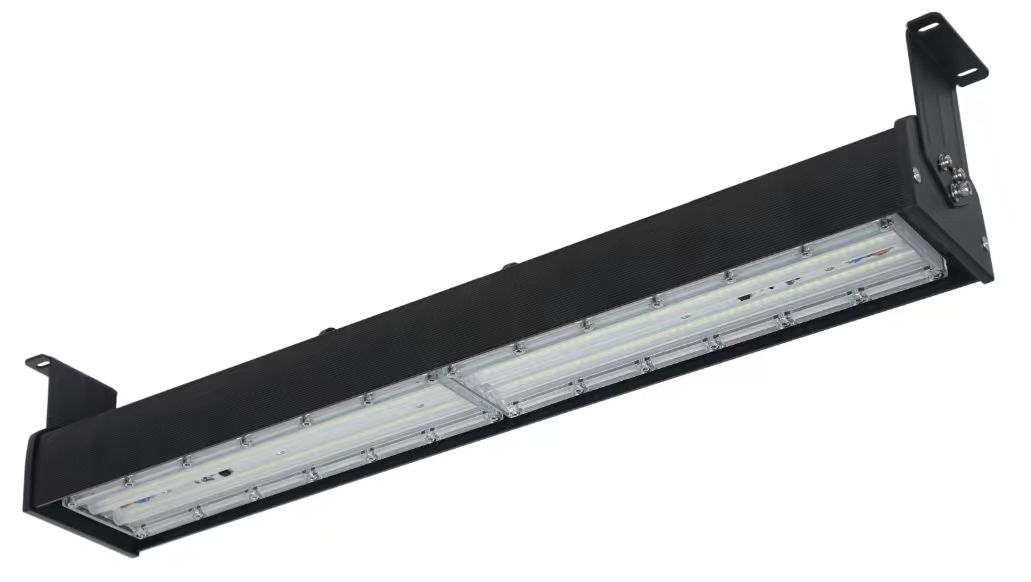
Linear LED high bay light — the SH-E01 family, used in warehouse and factory high-ceiling applications.
The Problem: Why a Wattage-First Specification Fails
A brief that says “give me a 200W high bay” has already answered the least useful question. Wattage describes power draw, not delivered light, not environmental survival, and not electrical compatibility. Three failure modes account for most re-specification work in commercial projects.
- Environment mismatch. An IP20 fixture is specified into a damp, dusty or wash-down area. In this catalogue the PL02 panel is IP20 and indoor-rated, the SH-E01 linear high bay is IP65, and the solar security light is IP44 — confusing them is a returns problem, not a lighting problem.
- Photometric mismatch. Fixtures of different CCTs end up in the same sightline — 6500K units beside 3000K units — and the finished space looks patched even though every unit works correctly.
- Electrical mismatch. A fixture rated 185–265V is ordered for a site that needs 100–265V input, or a fitting with up to 2KV surge protection is installed where the HL-E01's 6KV/6KV protection was the reason the site was quoted in the first place.
For a distributor or an EPC buyer, the cost of these errors is not the unit price. It is the return freight, the second site visit, the emergency re-order and the credibility spent with the end client. Long-term supply relationships are usually won or lost on whether the first parameter set was right.
Industry Background: A Maturing LED Market Rewards Parameter Literacy
Commercial lighting is now overwhelmingly an LED category. Grand View Research estimated the global commercial lighting market at USD 47.54 billion in 2024, with LED products holding a 58.1% revenue share. At the wider level, Fortune Business Insights valued the global LED lighting market at USD 109.11 billion in 2025 and projected it to reach USD 336.90 billion by 2034.
Supply is concentrated. According to the Observatory of Economic Complexity, China exported USD 31.4 billion in light fixtures in 2024 — 59.3% of total global light-fixture exports. Product-level growth is uneven: IMARC Group put the global LED flood light market at USD 9.4 billion in 2025, growing at a CAGR of 8.52% toward USD 20.1 billion by 2034, while Vantage Market Research projects the solar street lighting market to reach USD 22.5 billion by 2030, a CAGR of 15.8% from 2024.
Two consequences follow for anyone buying or reselling commercial LED lighting:
- Because fixture bodies and LED packages are increasingly similar between suppliers, the comparable differentiator is documented parameter data — published IP ratings, efficacy figures, CCT options, beam angles and electrical limits.
- Compliance is a filter rather than a formality. The core safety and performance standards for LED luminaires are IEC 60598 for luminaires, UL 1598 for luminaires, and UL 8750 for LED equipment, as set out by UL Solutions.
Zhejiang Lepeng Electric Appliance Co.,Ltd. is a Chinese LED lighting manufacturer founded in 2009, headquartered in the Baiguan Industrial Zone of Shangyu, Zhejiang Province, with additional production bases in Qiandaohu, Zhejiang and Jingdezhen, Jiangxi. The company operates 200,000 m² of factory space, employs 2,000 people, runs a 200-person R&D team, and reports monthly capacity of 45 million LED lamps and 5 million LED luminaires. Around 90% of output is exported, with main markets in the EU, Southeast Asia, the Middle East and Latin America. Its own brand, MKOPTO, and its OEM/ODM capability matter to the discussion below: catalogue consistency is what makes a parameter framework usable across a distributor's whole product mix.
Detailed Solution: The Six Parameters, Defined
1. Ingress protection (IP) — decide this first
IP rating describes how well a luminaire excludes solid objects and water; the first digit covers solids, the second covers liquids. It is the parameter that decides whether a technically excellent fixture is usable at all. Three reference points from this range:
- IP20 — PL02 panel light. Indoor use with limited dust and water exposure: offices, retail, corridors, hospitality ceilings. Mounted as a surface or recessed panel.
- IP44 — solar security light with PIR motion sensor. Protected against splashing water, suited to walls, driveways, pathways, garages and yards where rain reaches the fixture but immersion does not occur.
- IP65 — SH-E01 linear high bay. Dust-tight and protected against water jets, suitable for warehouses, factories and workshops where dust and occasional wash-down are part of normal operations.
Where the IP rating is not stated for a specific model or wattage, treat it as an open item to confirm in writing. Housing material alone — aluminium, ABS, glass or PC — does not tell you the IP class.
2. Luminous efficacy — the parameter that sets installed wattage
Luminous efficacy is measured in lumens per watt (lm/W) and describes how much light a fixture produces per unit of electricity. Output is the product of wattage and efficacy, so at equal wattage a 150 lm/W fixture produces roughly 50% more light than a 100 lm/W fixture. Published values across these five families:
- SH-E01 linear high bay: 100 / 135 / 150 lm/W
- HL-E01 UFO high bay: 140 / 160 / 185 / 210 lm/W
- FL-C01 floodlight: 100 / 120 lm/W
- PL02 panel light: 90 / 110 lm/W
For a project, higher efficacy reduces the wattage step needed to reach a target light level, which lowers connected load and can reduce the fixture count. For a distributor, it changes the SKU mix: a high-efficacy line can serve the same brief with fewer wattage variants. Efficacy is a ratio, not a quality grade — it has to be read together with CCT, distribution and the environment the fixture will live in.
3. Correlated colour temperature (CCT) — decide it per sightline
CCT sets the appearance of white light. The engineering rule is simple: decide CCT by visible area, not by fixture, because the eye compares adjacent surfaces. Options in this range:
- SH-E01 linear high bay: 3000K / 4000K / 5000K / 6500K — the widest range of the five families
- HL-E01 UFO high bay: 4000K / 5000K / 6500K
- FL-C01 floodlight: 3000K / 4000K / 6500K
- PL02 panel light: 2700K–6000K, 3-CCT selectable
- Solar security light with PIR motion sensor: 6500K cool white (fixed)
The 3-CCT selectable PL02 is the most channel-friendly configuration in the list: one stocked unit covers 2700K to 6000K requirements, which cuts SKU count and reduces the chance that a later replacement arrives in a mismatched colour temperature.
4. Beam angle and light distribution
Beam angle determines where the lumens land. Only specify fixtures with a published distribution figure, and for linear fixtures require both planes. The SH-E01 states 90° (H) × 120° (V) — an asymmetric pattern with a wider vertical spread than horizontal. Mounted with the long axis along an aisle, the narrower horizontal angle concentrates light along racking and the wider vertical angle covers across the aisle.
That footprint is structurally different from a round, symmetrically distributed high bay of the same output, which is why matching wattage across two fixture types does not produce matching results. If a data sheet lists only a single beam angle for a linear product, push back before ordering.
5. Power range and electrical compatibility
Power range defines the steps available, not just a minimum and maximum. The SH-E01 is offered in four discrete steps — 50 / 100 / 150 / 200W. The HL-E01 runs 100 / 150 / 200 / 240W. The FL-C01 spans a continuous band from 10W to 300W in a single series, and the PL02 covers 9 / 12 / 18 / 24W. Discrete steps suit projects with fixed designs; a wide band suits distributors serving many small jobs from one line.
The electrical values that decide project fit:
- Voltage: the HL-E01 is available in 185–265V or 100–265V; the FL-C01 in 100–240V or 220–240V.
- Surge protection: the HL-E01 states 6KV/6KV; the FL-C01 states surge protection up to 2KV.
- Power factor: the FL-C01 states >0.9.
- Wiring: the HL-E01 ships with 3×1.0mm² cable with 300mm exposed leads, pre-wired to the power supply.
These four lines separate a quotation that installs cleanly from one that needs correction on site — and correction on site is where margin disappears.
6. Mounting method and control
Mechanical fit and control behaviour are the last two parameters, and the ones most often discovered only after delivery.
- The SH-E01 comes in three body lengths — 305.6×97.3×68.1mm, 580.6×97.3×68.1mm and 855.6×97.3×68.1mm — so a linear run can be sized to the bay rather than the bay to the fixture. Its housing is aluminium alloy with a PC/PMMA lens.
- The HL-E01 uses a die-cast aluminium body with a PC lens; its pre-wired leads shorten work at height.
- The FL-C01 body runs from 105×97×27mm to 500×457×49mm across the wattage band, in an aluminium housing with a glass cover.
- The PL02 is offered surface-mounted or recessed, round or square, in 5-inch, 8-inch and 12-inch sizes, with round bodies of φ160×40mm, φ203×40mm and φ305×40mm, square bodies of 160×160×40mm, 203×203×35mm and 305×305×40mm, and cut-out sizes of φ75–125mm, φ75–150mm and φ75–250mm at 25mm increments. Control is by remote plus a microwave sensor for automatic ON/OFF, with three-level dimming at 50% / 75% / 100%.
- The solar security light is a self-contained wall-mounted unit measuring 198×130×193.1mm, with an ABS housing, PC lens and monocrystalline silicon solar panel, PIR motion sensor, and remote control with auto mode.
Step-by-Step Breakdown: A Parameter-First Selection Workflow
The order below is deliberate. Each step narrows the catalogue before the next one runs, so the shortlist at the end is already compliant.
- Classify the space. Indoor dry, indoor damp or dusty, outdoor exposed, or off-grid. This single decision sets the IP floor and eliminates whole families: IP20 for the PL02, IP44 for the solar security light, IP65 for the SH-E01.
- Fix CCT by sightline. Choose one colour temperature per visible area. Use 3-CCT selectable products such as the PL02 (2700K–6000K) where a mixed portfolio has to be served from limited stock.
- Set the target in lumens, then choose an efficacy class. Convert the lighting requirement to lumens and divide by the efficacy class you can source — across these families, 90 lm/W to 210 lm/W. The result gives you the wattage step. Working this way prevents the common error of buying more watts than the design needs.
- Match distribution to geometry. Aisles, racking and production lines call for a published asymmetric pattern such as the SH-E01's 90° (H) × 120° (V). Open-floor and general areas need the distribution figure confirmed from the data sheet before the order is released.
- Verify the electrical interface. Confirm voltage range (185–265V versus 100–265V on the HL-E01; 100–240V or 220–240V on the FL-C01), surge protection (6KV/6KV on the HL-E01, up to 2KV on the FL-C01), power factor (>0.9 on the FL-C01) and lead configuration (3×1.0mm² cable with 300mm exposed leads, pre-wired on the HL-E01).
- Check the mechanical interface. Confirm body lengths, cut-outs and mounting type before quoting: SH-E01 at 305.6mm, 580.6mm and 855.6mm; PL02 cut-outs at φ75–125mm, φ75–150mm and φ75–250mm in 25mm increments; surface-mounted or recessed.
- Close the compliance and lifecycle loop. Map the order to IEC 60598, UL 1598 and UL 8750, request the manufacturer's industry certifications and qualification certificates covering its manufacturing standard, and confirm warranty and spare-parts terms — the SH-E01 carries a five-year warranty.
Step 7 is where commercial lighting stops being a single purchase and becomes a channel relationship. The parameter set that wins a project has to remain available, serviceable and replaceable years later.
Use Cases: Matching Fixture Families to Spaces
Warehouses, factories and workshops with high ceilings
For aisle-organised, dusty, high-ceiling space, the SH-E01 linear high bay is the direct fit: IP65 protection, 50 / 100 / 150 / 200W, 100 / 135 / 150 lm/W, 3000K–6500K, a 90° (H) × 120° (V) beam angle, aluminium alloy housing with PC/PMMA lens, and a five-year warranty.
Where the ceiling is high but the space is open rather than aisle-structured, and where maximum efficacy plus surge resilience drives the decision, the HL-E01 UFO high bay covers 100 / 150 / 200 / 240W at 140 / 160 / 185 / 210 lm/W in 4000K, 5000K or 6500K, with a die-cast aluminium body, PC lens, 6KV/6KV surge protection and pre-wired leads.
Retail interiors, offices and hospitality ceilings
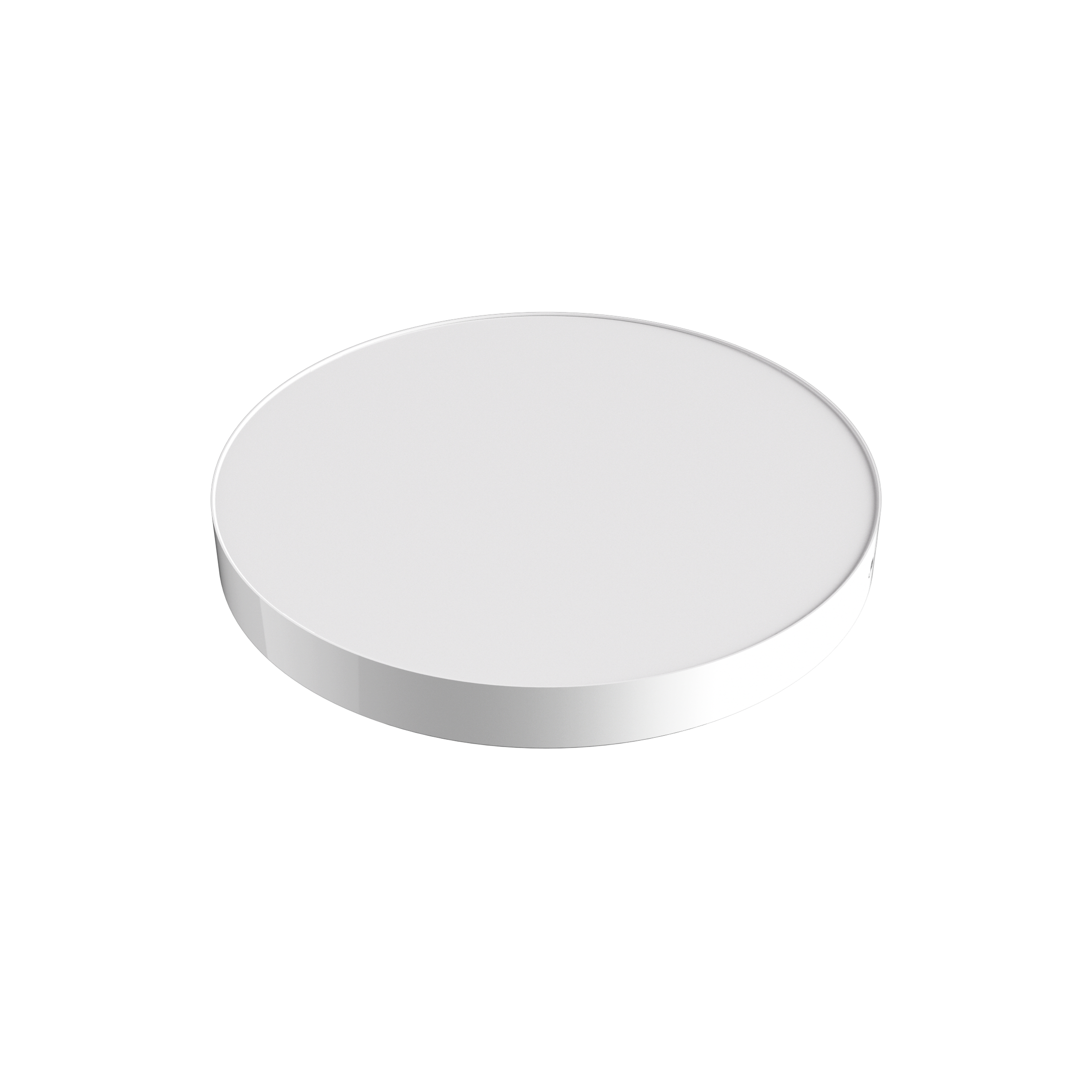
PL02 LED panel light — surface-mounted or recessed, 3-CCT selectable, with three-level dimming.
Indoor commercial fit-outs need an IP20 indoor-rated product, and the PL02 answers with 9 / 12 / 18 / 24W, 90 / 110 lm/W, 2700K–6000K selectable CCT, 50% / 75% / 100% dimming, remote plus microwave sensor control, and round or square bodies in 5-inch, 8-inch and 12-inch sizes. The selectable CCT and three-level dimming let one stocked unit serve several fit-out specifications — useful for contractors and for distributors carrying limited lines.
Outdoor areas, yards and perimeter lighting
The FL-C01 series floodlight spans 10W to 300W in one product series, at 100 / 120 lm/W and 3000K / 4000K / 6500K, with surge protection up to 2KV, power factor >0.9, an aluminium housing with glass cover, and body dimensions from 105×97×27mm to 500×457×49mm across the range. A single series covering small facade wash and large area lighting is a stocking advantage: fewer lines, wider quotation coverage.
Off-grid and retrofit security
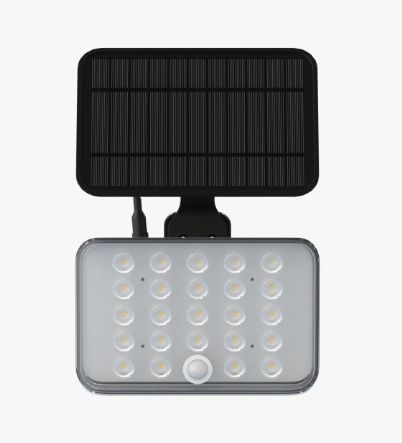
Solar security light with PIR motion sensor — self-contained, IP44, 10W / 1600LM.
Where running a mains circuit is impractical, the solar security light with PIR motion sensor delivers 10W and 1600LM at 6500K cool white from a monocrystalline silicon solar panel, in an IP44 ABS housing with PC lens. The PIR sensor triggers on movement, and remote control plus auto mode handle daily operation. Typical placements are yards, driveways, garages, pathways and walls.
Multi-site rollouts and channel programmes
For distributors managing repeat projects, the decisive factor is parameter consistency across families: one supplier covering high bay, floodlight, panel and solar security means one set of parameter conventions, one certification file and one spare-parts path, rather than four suppliers each documenting terms differently.
Comparison Table: Parameter by Parameter
| Parameter | SH-E01 linear high bay | HL-E01 UFO high bay | FL-C01 floodlight | PL02 panel light | Solar security light (PIR) |
|---|---|---|---|---|---|
| Housing / lens | Aluminium alloy housing + PC/PMMA lens | Die-cast aluminium body + PC lens | Aluminium + glass | Aluminium / plastic frame + PC diffuser | ABS housing + PC lens + monocrystalline silicon solar panel |
| Power options | 50 / 100 / 150 / 200W | 100 / 150 / 200 / 240W | 10–300W | 9 / 12 / 18 / 24W | 10W (1600LM) |
| Luminous efficacy | 100 / 135 / 150 lm/W | 140 / 160 / 185 / 210 lm/W | 100 / 120 lm/W | 90 / 110 lm/W | — |
| CCT | 3000K / 4000K / 5000K / 6500K | 4000K / 5000K / 6500K | 3000K / 4000K / 6500K | 2700K–6000K, 3-CCT selectable | 6500K cool white |
| Beam angle | 90° (H) × 120° (V) | — | — | — | — |
| Ingress protection | IP65 | — | — | IP20 | IP44 |
| Electrical | — | 185–265V or 100–265V; surge 6KV/6KV; 3×1.0mm² cable, 300mm exposed leads, pre-wired | 100–240V or 220–240V; surge up to 2KV; PF >0.9 | — | — |
| Mounting / control | Linear body in 305.6 / 580.6 / 855.6mm lengths | Pre-wired for ceiling or suspension mounting | Body dimensions 105×97×27mm to 500×457×49mm by wattage | Surface-mounted or recessed; round / square; cut-outs φ75–125 / φ75–150 / φ75–250mm; remote + microwave sensor; 50/75/100% dimming | Wall-mounted, 198×130×193.1mm; PIR sensor; remote control + auto mode |
| Warranty | 5 years | — | — | — | — |
| Typical application | Warehouses, factories, workshops | Warehouses, factories, retail spaces, gyms | Outdoor areas, yards, perimeter and facade lighting | Offices, retail and hospitality ceilings | Yards, driveways, garages, pathways, walls |
Where a cell shows “—”, that parameter was not part of the specification set used to build this guide. Confirm it against the supplier's current data sheet for the exact model, wattage and CCT before the order is placed. Matching a fixture by wattage alone is the fastest way to create a mismatch that only appears on site.
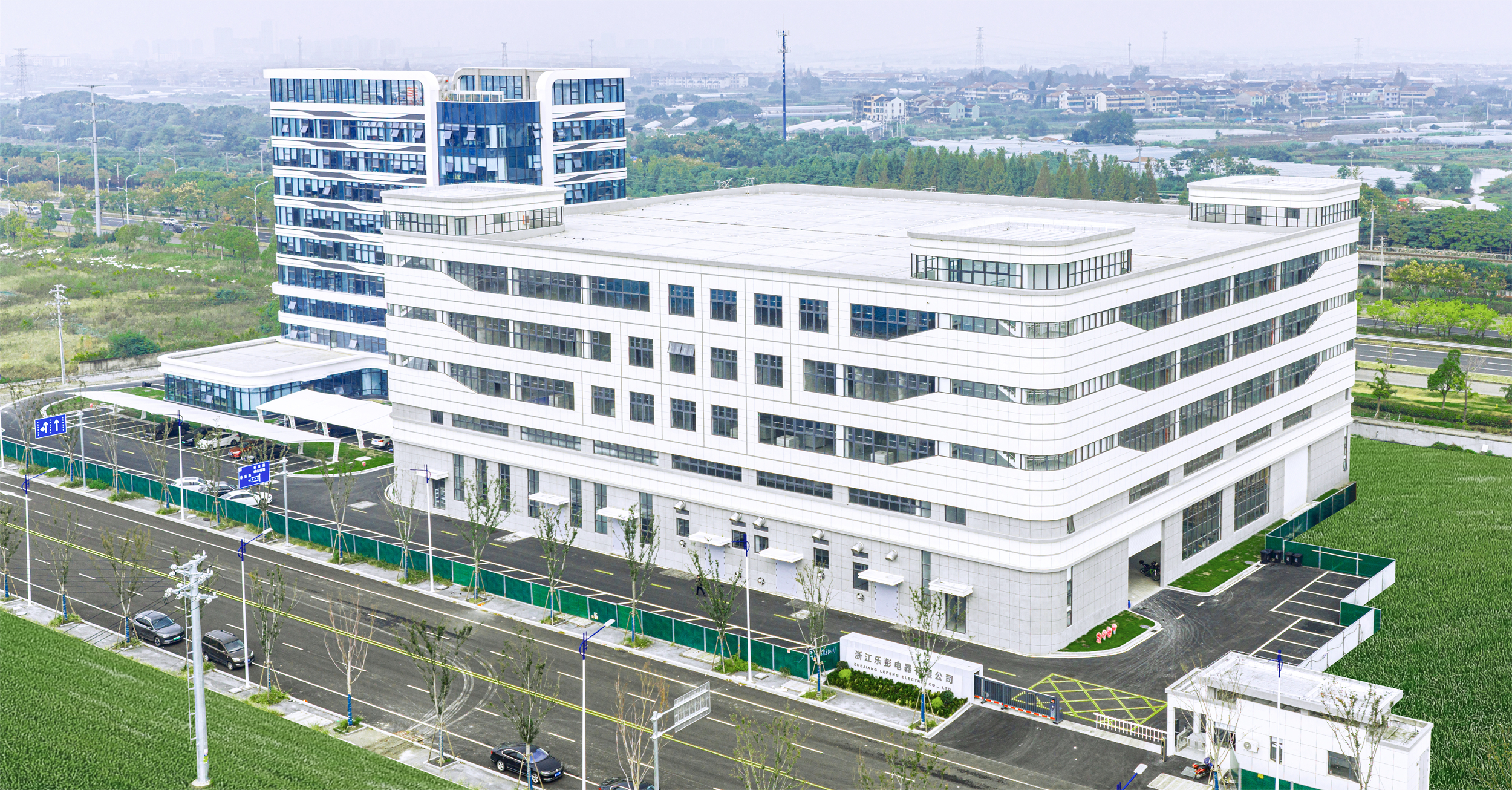
Headquarters factory, Zhejiang — part of the production base behind these parameter sets.
FAQ
Which standards and certification documents should a distributor verify before listing commercial LED lighting?
Core luminaire safety and performance standards are IEC 60598 for luminaires, UL 1598 for luminaires, and UL 8750 for LED equipment, as published by UL Solutions. Beyond the standard numbers, ask the manufacturer for the industry certifications and qualification certificates that support its manufacturing standard — Zhejiang Lepeng Electric Appliance Co.,Ltd. holds such certifications and qualification certificates — and request that they are mapped to the specific SKU, wattage and CCT being ordered, because a company-level certificate is not the same as a tested configuration.
Can one long-term manufacturer cover a distributor's full parameter mix — high bay, floodlight, panel and solar security?
Yes, if the catalogue is broad enough to stay parameter-consistent. Zhejiang Lepeng Electric Appliance Co.,Ltd. manufactures LED floodlight, high bay, linear high bay, street light, garden light, stadium light, solar flood light, solar street light, solar garden light, bulkhead, tri-proof light, worklight, ceiling light, ceiling fan light, panel light, slim batten, tube, bulb and mood light, and its factory is fully capable of undertaking OEM and ODM customized projects for global clients. The scale behind long-term supply is documented as 200,000 m² of factory space, 2,000 employees, a 200-person R&D team and monthly capacity of 45 million LED lamps and 5 million LED luminaires, with around 90% of output exported to the EU, Southeast Asia, the Middle East and Latin America.
What purchasing terms apply to a first bulk order?
Standard commercial terms are a minimum order quantity of 100 units, FOB delivery terms, acceptance based on pre-shipment testing, a 30% deposit, and final payment against a copy of the bill of lading. For a distributor, the practical value is that a first order can stay small enough to validate the parameters on site — IP rating, CCT, beam distribution, mounting and control — before a full SKU list is committed.
How is supply continuity protected in a long-term commercial LED lighting partnership?
Continuity rests on three things: manufacturing scale, documented service terms and a stable spare-parts path. Bulk-order lead times are reported as 15% shorter than among smaller peers, with an on-time delivery rate above 95%, standardized spare-parts supply, a long product lifecycle with low failure rate, and after-sales support for overseas projects — backed in this range by a five-year warranty on the SH-E01 linear high bay. To test those claims against your own market before committing, request the current catalogue and a sample or quotation for the exact SKU and CCT you intend to stock.
Conclusion: Read Parameters in Order, Buy Once
Commercial LED lighting rewards the buyer who asks six questions in sequence — where will it be installed (IP), how much light per watt (efficacy), what colour (CCT), where does the light go (beam angle), how much power and on what supply (power range and electrical), and how does it attach and switch (mounting and control). The SH-E01, HL-E01, FL-C01, PL02 and solar security light in this range show how those answers look in practice: 90 lm/W to 210 lm/W, IP20 to IP65, 9W to 300W, 2700K to 6500K, published beam geometry where it matters, and discrete or wide power options depending on the project type.
For distributors and project buyers, the payback is not only technical. A parameter-first specification reduces returns, shortens site commissioning and keeps a quotation defensible when the end client asks why a particular fixture was chosen. That is also what makes a supplier relationship last: the same documented parameters stay available for the next order, the next site and the next replacement cycle.
Planning a high bay, floodlight or panel order? Zhejiang Lepeng Electric Appliance Co.,Ltd. supplies commercial LED lighting to distributors, importers and project buyers, with OEM/ODM support and around 90% of output exported across the EU, Southeast Asia, the Middle East and Latin America.
Download the product brochure: Commercial LED lighting catalogue (PDF)
Request a sample or quotation: WhatsApp +86-13777885334 · Email fish@idealbright.com · Tel +86-575-82188752 · Website idealbright.com
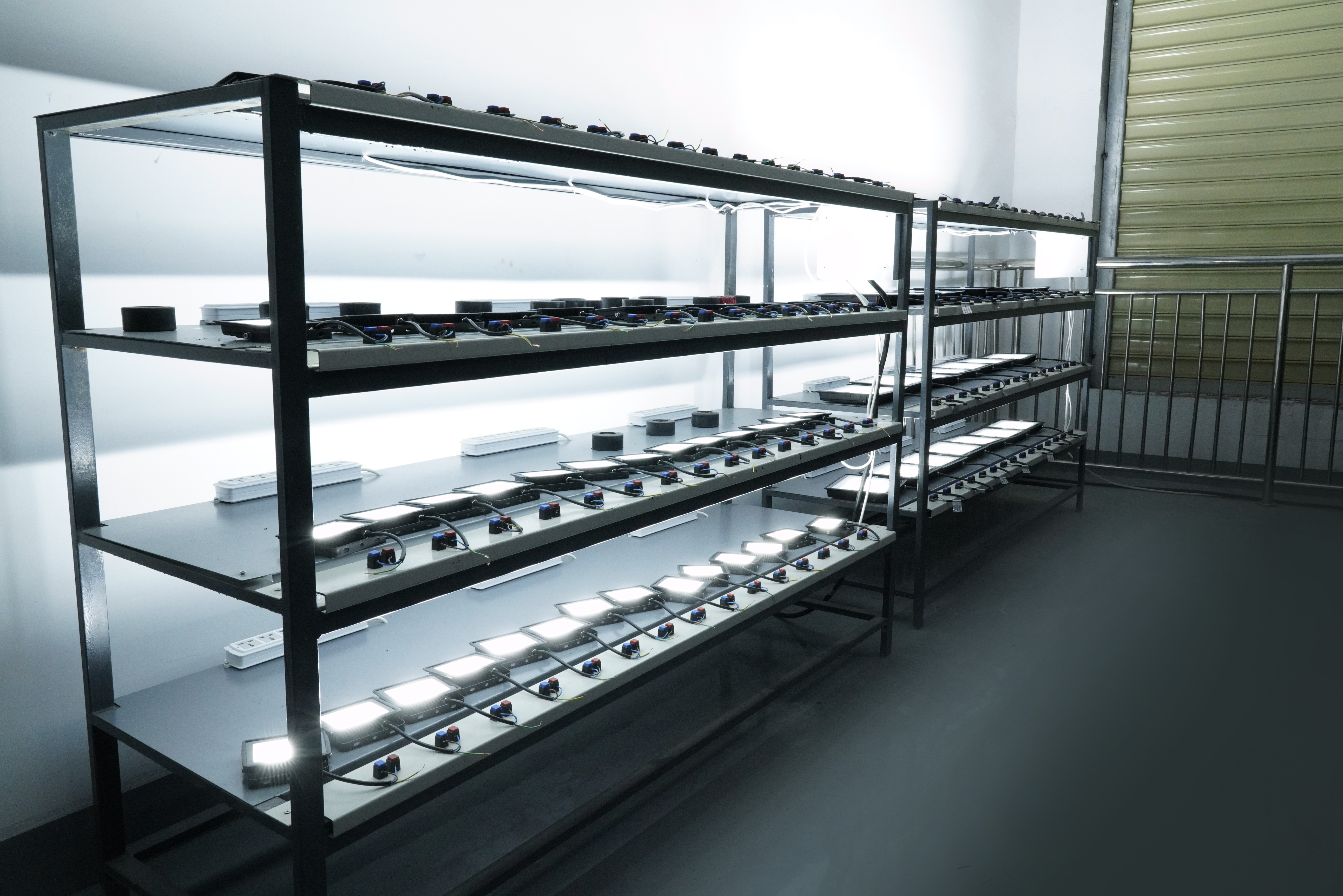
Production base supporting long-term distributor supply — consistent parameters, repeatable re-orders.
Have Questions or Need More Details?
Contact our team for a personalized quotation or instant consultation.
Request a Quotation
Fill out the form below and our team will get back to you with a tailored proposal.
WhatsApp Direct Chat
Prefer to chat in real-time? Message us on WhatsApp for instant assistance & quick answers.
- Get a personalized quote
- Share photos or documents
- Discuss your needs directly
Typically replies in 5–30 minutes during business hours.