Commercial LED Lighting Basics: Reading IP, lm/W, and Beam Angle Across Fixture Types
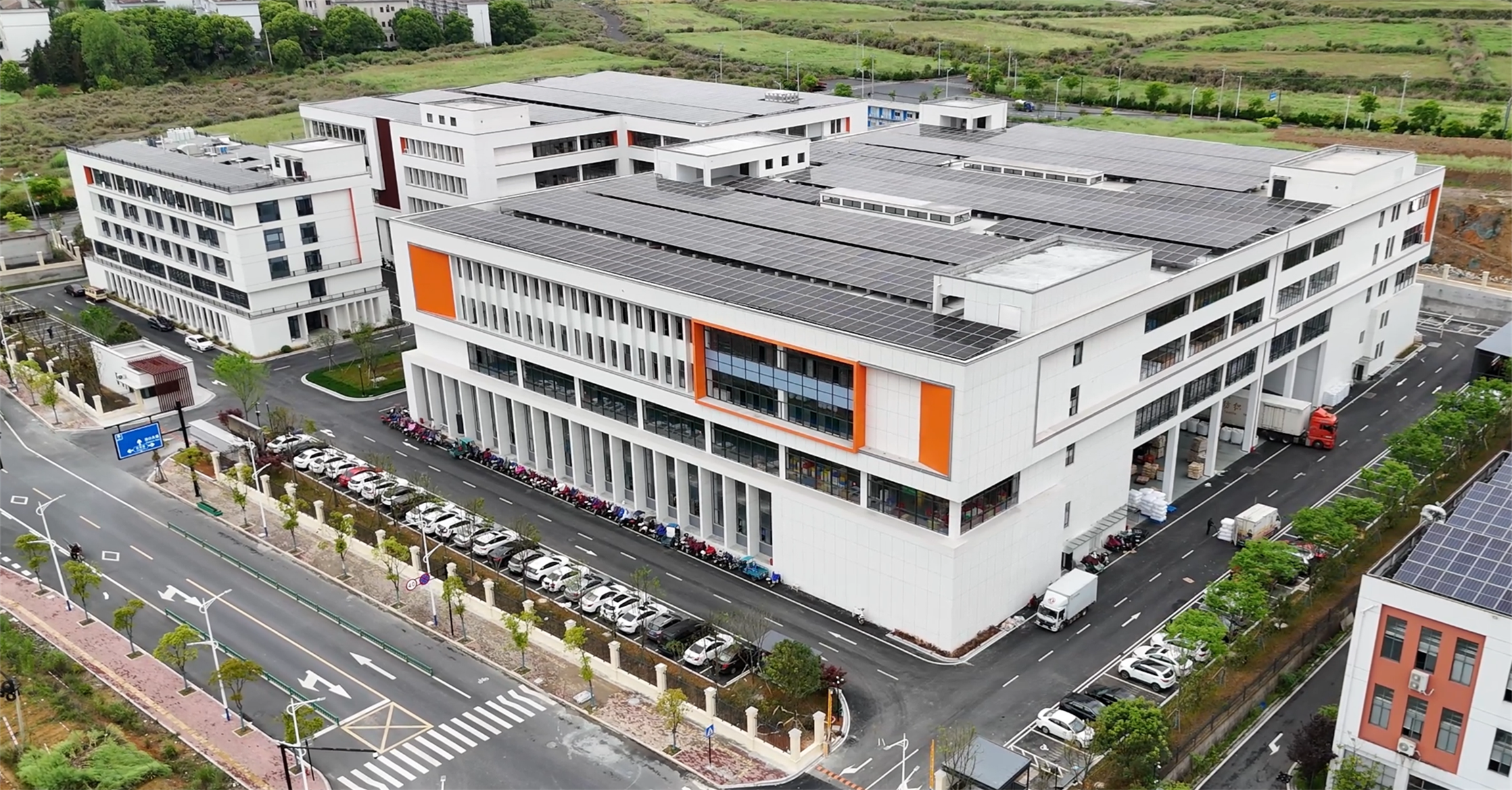
Hangzhou Factory. Image source: Zhejiang Lepeng Electric Appliance Co.,Ltd.
Three lines on a commercial LED specification sheet decide most selection outcomes: the IP rating, the luminous efficacy in lm/W, and the beam angle. The IP rating sets where a fixture can physically survive. The lm/W value sets how much electricity is required to deliver a given light output. The beam angle sets whether that output lands on a warehouse rack, a car park, or a building facade.
This guide explains what each value means on a real datasheet and applies them across five fixture families from Zhejiang Lepeng Electric Appliance Co.,Ltd. (Lepeng), an LED lamp and luminaire manufacturer founded in 2009 and headquartered in the Baiguan Industrial Zone of Shangyu, Zhejiang Province, China: the PL02 LED panel light, the SH-E01 linear high bay, the HL-E01 UFO high bay, the FL-C01 floodlight, and the 10 W solar security light with PIR motion sensor (catalog entry 8200). Where the supplied specification does not state a value, this article marks it as not stated rather than filling the gap with an estimate.
The Problem: Identical Labels, Incomparable Values
Almost every commercial LED fixture is described with the same few labels — power, lm/W, CCT, IP, beam angle — which creates a false sense of comparability. Values from different fixture types are not interchangeable, for three practical reasons.
Efficacy numbers belong to a platform, not to a category. A PL02 panel light at 110 lm/W and an HL-E01 UFO high bay at up to 210 lm/W are both described as efficient, but the two figures come from very different engineering. The high bay number comes from a die-cast aluminium body with a PC lens built for high ceilings and long duty cycles. The panel number comes from a low-profile indoor fixture with a PC diffuser and an IP20 frame. Reading the figure without the platform behind it tells a buyer very little.
An IP rating is an environment threshold, not a quality grade. IP20 is not a lower grade of IP65. IP20 is the correct rating for a dry indoor ceiling void; IP65 is what a dusty, hose-cleaned or semi-exposed industrial space requires. Buying a higher IP than the environment needs usually adds cost and weight; buying a lower IP than the environment needs creates failures that no warranty claim can fully repair.
Beam angle only means something relative to mounting height. The same distribution can be too narrow at 4 m and too wide at 12 m. For distributors, the cost of misreading these three lines shows up as returns, re-specification, and a catalogue that cannot be quoted confidently twice.
Industry Background: Why Spec Literacy Now Decides Supply Decisions
The commercial LED lighting market is large enough that specification wording has become a purchasing interface, not a technical detail. Published market research places the global LED lighting market at USD 109.11 billion in 2025, projected to reach USD 336.90 billion by 2034 (Fortune Business Insights). Commercial lighting specifically was estimated at USD 47.54 billion in 2024, with LED products holding a 58.1% revenue share (Grand View Research). The LED flood light segment alone was valued at USD 9.4 billion in 2025 and is projected to reach USD 20.1 billion by 2034 at an 8.52% CAGR (IMARC Group).
Supply is concentrated. China exported USD 31.4 billion in light fixtures in 2024, equal to 59.3% of total global exports, making it the largest exporter in the category (Observatory of Economic Complexity). Adjacent solar-powered categories are expanding too: the global solar street lighting market is projected to reach USD 22.5 billion by 2030, a 15.8% CAGR from 2024 (Vantage Market Research).
The consequence for buyers and channel partners is straightforward. With overlapping product families arriving from the same exporting base, the datasheet becomes the only reliable way to compare fixtures that look similar. Common safety benchmarks used in this process include IEC 60598 for luminaires, UL 1598 for luminaires, and UL 8750 for LED equipment (UL Solutions). Those standards address safety; the IP rating, efficacy, CCT and beam angle address fit. Both sets of information have to be read together before a specification is released.
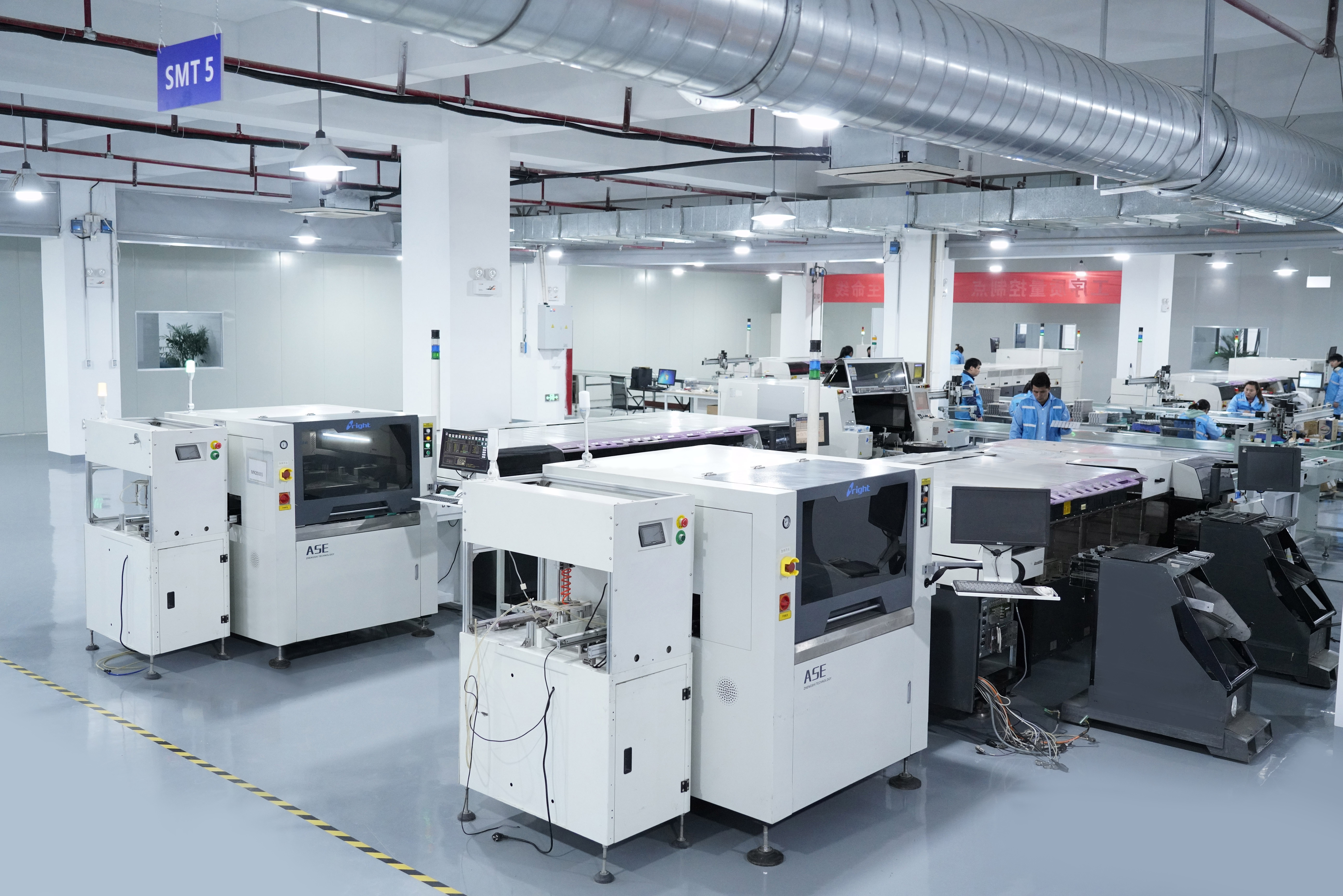
Jiangxi factory. Image source: Zhejiang Lepeng Electric Appliance Co.,Ltd.
How to Read the Core Specification Lines
IP Rating: Where the Fixture Can Live
An IP code has two digits. The first digit describes protection against solid objects and dust; the second describes protection against water. In commercial lighting, three classes appear most often. IP20 means the fixture is rated for indoor, dry, dust-controlled areas. IP44 means the enclosure is protected against solid objects above 1 mm and against water splashing from any direction — an outdoor wall or eaves position, not a jet-washed floor. IP65 means dust-tight and protected against water projected by a nozzle.
Lepeng's supplied specifications show how this applies across fixture types. The PL02 panel light is rated IP20, which matches a recessed or surface-mounted indoor ceiling where no dust or moisture load is expected. The SH-E01 linear high bay is rated IP65, which is what allows it to be specified into warehouses, factories and workshops where dust accumulates and cleaning equipment may pass nearby. The 10 W solar security light with PIR motion sensor is rated IP44 — appropriate for yards, driveways, garages, pathways and walls, where rain and splashing occur but pressure washing does not.
Reading rule: set the IP floor from the environment first, then choose the fixture. If the supplied specification for a specific SKU does not list an IP value — the HL-E01 and FL-C01 entries in the table below do not — request the confirmed rating for that SKU and mounting position before you publish it in a catalogue.
Luminous Efficacy (lm/W): Electricity per Lumen Delivered
Luminous efficacy divides total light output by power input. A higher value means fewer watts for the same delivered light, which reduces running cost and, in high-ceiling spaces, the number of fixtures needed to reach a target illuminance. Within Lepeng's range, the published figures are:
- PL02 panel light: 90 / 110 lm/W at 9 / 12 / 18 / 24 W.
- SH-E01 linear high bay: 100 / 135 / 150 lm/W across 50 / 100 / 150 / 200 W.
- HL-E01 UFO high bay: 140 / 160 / 185 / 210 lm/W across 100 / 150 / 200 / 240 W.
- FL-C01 floodlight: 100 / 120 lm/W across a 10–300 W range.
- Solar security light with PIR sensor: 10 W producing a stated 1,600 lumens; the supplied specification does not publish an efficacy class for this unit.
The pattern to remember is that efficacy rises with power inside the same family, because larger wattages share the same driver and thermal platform across a wider body. Comparing the lowest wattage of one family against the highest wattage of another is the most common ranking error in commercial LED selection.
CCT: Matching the Lit Environment
Correlated colour temperature, expressed in Kelvin, describes how warm or cool the light looks. Lower values read as warm and are typically used in hospitality, residential and retail interiors; mid values are common in offices and general industrial space; higher values look crisp and are widely used in high bays, task areas and security lighting. The verified ranges in this product set are:
- PL02 panel light: 2700K–6000K, with 3-CCT selectable switching in one fixture.
- SH-E01 linear high bay: 3000K / 4000K / 5000K / 6500K.
- HL-E01 UFO high bay: 4000K / 5000K / 6500K.
- FL-C01 floodlight: 3000K / 4000K / 6500K.
- Solar security light with PIR sensor: 6500K cool white.
For distributors, a selectable CCT model such as the PL02 reduces the number of SKUs that must be stocked for indoor fit-out projects, because one unit covers three colour settings. For industrial projects, a narrower fixed set — 4000K, 5000K and 6500K — keeps bulk ordering simple and consistent across repeat deliveries.
Beam Angle: Mounting Height and Footprint Geometry
Beam angle describes how widely a fixture spreads its light. A narrow distribution concentrates intensity into a smaller area, which suits greater mounting heights. A wide distribution covers more floor at lower intensity. The SH-E01 linear high bay is the fixture in this set with a published beam angle: 90° horizontally by 120° vertically. That asymmetry is deliberate. A linear high bay runs along the length of a rack row or an aisle, so it needs a wider spread along its length and a tighter spread across its width to keep light on the racks instead of the walls.
The other families in this range are not published in the same horizontal-by-vertical format, and that is normal. UFO high bays are usually specified by their distribution type and mounting height rather than by a single angle; floodlights are specified by aiming direction and the area to be covered; panel lights depend on the diffuser and the short distance between the ceiling and the working plane, so a beam angle figure is less meaningful than diffuser type and cut-out dimensions. When a datasheet does not publish a beam angle, the practical next step is to request the photometric file or a layout calculation for the actual room dimensions rather than to assume a value.
The Secondary Lines: Voltage, Surge Protection, Control and Warranty
Four specification lines sit behind IP, lm/W, CCT and beam angle, and they decide whether a project runs smoothly after installation.
- Input voltage range. The HL-E01 UFO high bay is offered at 185–265 V or 100–265 V; the FL-C01 floodlight at 100–240 V or 220–240 V. A wider range is useful in regions where supply fluctuates.
- Surge protection. The HL-E01 lists 6 KV / 6 KV surge protection and the FL-C01 lists protection up to 2 KV. This matters in industrial plants and outdoor installations where switching events are frequent.
- Control and dimming. The PL02 panel light supports three-level brightness at 50% / 75% / 100% with a remote control and a microwave sensor for automatic ON/OFF. The solar security light uses a PIR passive infrared motion sensor with remote control and an automatic mode.
- Warranty and construction. The SH-E01 linear high bay is listed with a 5-year warranty, an aluminium alloy housing and a PC/PMMA lens. The HL-E01 uses a die-cast aluminium body with a PC lens and a pre-wired 3×1.0 mm² cable with 300 mm exposed leads. The FL-C01 uses an aluminium and glass construction with a power factor above 0.9.
Step-by-Step: A Spec-Reading Workflow for Buyers and Distributors
Applied in order, the following sequence prevents most specification errors and produces a specification line that can be reused on the next order.
- Classify the environment. Dry indoor ceiling, semi-exposed exterior, harsh industrial with dust and moisture, or off-grid with no mains cable.
- Set the IP floor. IP20 for dry indoor; IP44 for exposed but sheltered outdoor positions; IP65 for dusty or cleaned industrial areas such as the SH-E01 case.
- Fix the light level, then the efficacy floor. Decide the required illuminance first, then choose the lm/W tier within the wattage you can mount. Use comparable wattages only.
- Choose the distribution from the geometry. Asymmetric linear distribution for rack rows and aisles; concentrated point distribution for very high ceilings; aimed distribution for outdoor target areas; diffuse distribution for low indoor ceilings.
- Lock the CCT and the control behaviour. Fixed or selectable CCT, and whether dimming, microwave sensing or PIR motion control is required.
- Check the electrical line. Voltage range, surge protection, power factor and cable format all have to match the site, not just the catalogue.
- Confirm documentation and commercial terms. Certificate scope per SKU, warranty term per SKU, and the purchasing terms. The terms confirmed for this supply base are a MOQ of 100 units, FOB delivery terms, pre-shipment test as the acceptance criterion, and payment of a 30% deposit with the final balance against a copy of the bill of lading.
- Freeze the model codes. Publish PL02, SH-E01, HL-E01 and FL-C01 with their verified specification lines so that the next order is a repeat, not a renegotiation.
Use Cases: Which Fixture Type Fits Which Environment
Warehouse and logistics aisles. The SH-E01 linear high bay is the natural fit for rack rows: IP65 protection, a 90° × 120° distribution aligned to the aisle, 50–200 W options, up to 150 lm/W and a 5-year warranty. For concentrated lighting from very high ceilings, the HL-E01 UFO high bay covers 100–240 W with efficacy up to 210 lm/W and 6 KV / 6 KV surge protection.
Factories and workshops with dust load. The IP65 rating of the SH-E01 is the deciding specification here; the 3000K–6500K CCT set allows closer or cooler light depending on the task. Where the mounting point is high and the layout is point-based rather than linear, the HL-E01 applies, but its IP rating should be confirmed against the supplied specification for the exact SKU and mounting position.
Indoor commercial fit-out. The PL02 panel light covers 9–24 W at 90–110 lm/W with IP20, three-level 50% / 75% / 100% dimming, microwave sensing and a 2700K–6000K selectable CCT in 5-inch, 8-inch and 12-inch round or square formats. It is a ceiling-level fixture, so the governing specifications are cut-out size, diffuser, control behaviour and IP20 suitability — not beam angle.
Outdoor area and facade lighting. The FL-C01 floodlight spans 10–300 W at 100–120 lm/W, with 3000K, 4000K or 6500K CCT, a power factor above 0.9, surge protection up to 2 KV and an aluminium and glass body. It is a project-driven fixture, so aiming geometry and mounting height should be agreed with a layout before ordering.
Perimeter and yard security without cabling. The 10 W solar security light with PIR motion sensor delivers a stated 1,600 lumens at 6500K from a 198 × 130 × 193.1 mm body rated IP44, with a monocrystalline silicon solar panel, remote control and automatic PIR-triggered operation. It suits walls, driveways, yards, garages and pathways where trenching a mains feed is not practical.
Building a distributor catalogue. The same three specification lines — IP, lm/W and beam angle — should appear in the same position for every SKU. That consistency is what makes a range quotable, and it is what makes a multi-year supply relationship work: repeat orders are only repeat orders if the specification behind them stays fixed.
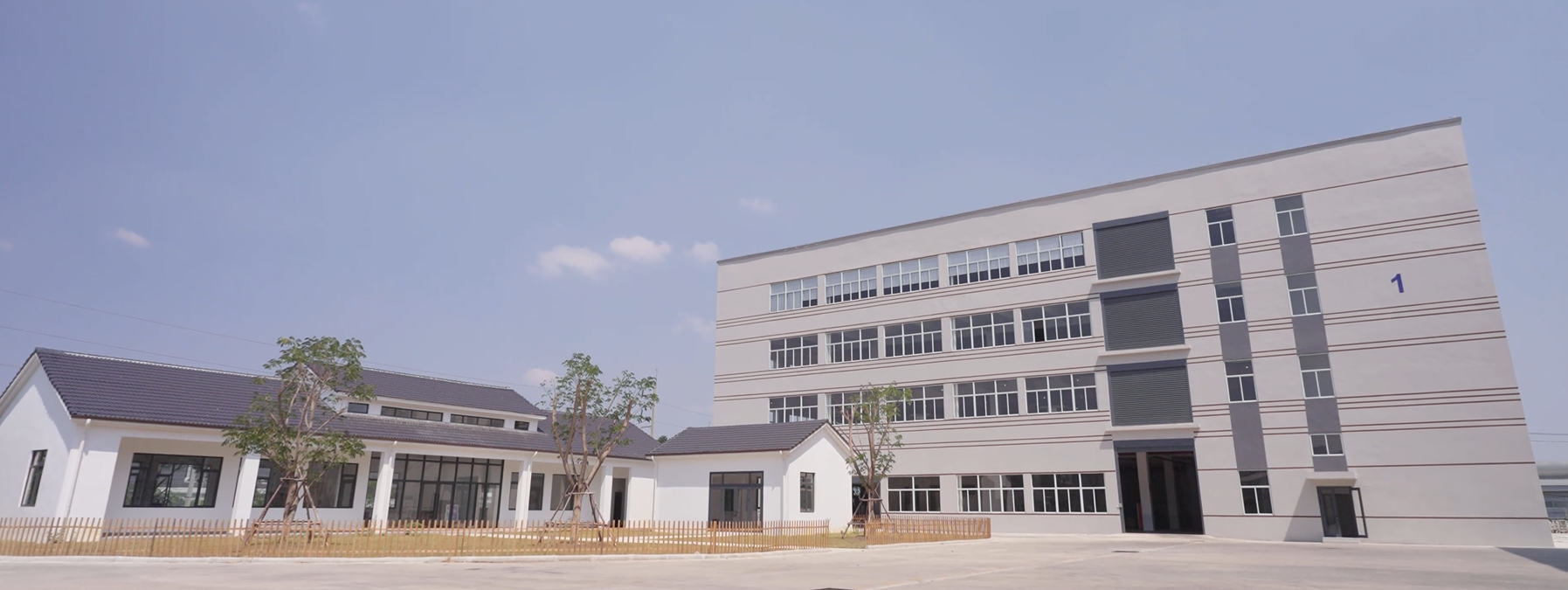
Thailand factory. Image source: Zhejiang Lepeng Electric Appliance Co.,Ltd.
Comparison Table: Verified Specifications by Fixture Type
The table below uses only values published in the supplied product specifications. Cells marked as not stated are values the supplied specification does not list; they should be confirmed with the supplier for the exact SKU before being used in a quotation or catalogue.
| Model | Fixture type | Power | Efficacy | CCT | IP | Beam angle |
|---|---|---|---|---|---|---|
| PL02 | LED panel light, surface-mounted or recessed, round and square | 9 / 12 / 18 / 24 W | 90 / 110 lm/W | 2700K–6000K (3-CCT selectable) | IP20 | Not stated in supplied spec |
| SH-E01 | LED linear high bay for warehouse and factory | 50 / 100 / 150 / 200 W | 100 / 135 / 150 lm/W | 3000K / 4000K / 5000K / 6500K | IP65 | 90° (H) × 120° (V) |
| HL-E01 | UFO LED high bay, die-cast aluminium | 100 / 150 / 200 / 240 W | 140 / 160 / 185 / 210 lm/W | 4000K / 5000K / 6500K | Not stated in supplied spec | Not stated in supplied spec |
| FL-C01 | Outdoor LED floodlight, aluminium and glass | 10–300 W | 100 / 120 lm/W | 3000K / 4000K / 6500K | Not stated in supplied spec | Not stated in supplied spec |
| Solar security light, PIR (catalog 8200) | Solar security light with PIR motion sensor | 10 W | Not stated; 1,600 lm output | 6500K | IP44 | Not stated in supplied spec |
Additional verified values: the HL-E01 is offered at 185–265 V or 100–265 V with 6 KV / 6 KV surge protection and a pre-wired 3×1.0 mm² cable with 300 mm exposed leads. The FL-C01 offers surge protection up to 2 KV and a power factor above 0.9. The SH-E01 is listed with a 5-year warranty. The PL02 supports 50% / 75% / 100% three-level dimming with remote control and microwave sensor.
FAQ
1. Which standards and certifications should a distributor verify before listing commercial LED lighting?
Luminaire safety and performance requirements are commonly benchmarked against IEC 60598 for luminaires, UL 1598 for luminaires, and UL 8750 for LED equipment. Zhejiang Lepeng Electric Appliance Co.,Ltd. states that it holds industry certifications and qualification certificates that attest to its manufacturing standards. Because certificate scope is issued per product and per destination market, a distributor should request the certificate documents that name the exact SKU rather than a general company statement. Note that an IP rating is not a safety certification: IP describes ingress protection, while IEC 60598, UL 1598 and UL 8750 address electrical and luminaire safety, and both should be confirmed on the datasheet.
2. Can one manufacturer supply both indoor panels and heavy-duty high bays?
Yes. Lepeng was founded in 2009 and manufactures across a range that includes LED floodlights, high bays, linear high bays, street lights, garden lights, stadium lights, solar flood lights, solar street lights, solar garden lights, bulkhead, tri-proof, worklight, ceiling, panel, slim batten, tube and bulb luminaires, plus ceiling fan lights and mood lights. The company operates its headquarters factory in the Baiguan Industrial Zone of Shangyu, Zhejiang Province, with two additional production bases in Qiandaohu, Zhejiang and Jingdezhen, Jiangxi. It reports 2,000 employees, a monthly production capacity of 45 million LED lamps and 5 million LED luminaires, a 200-person R&D team, and full capability to undertake OEM and ODM customized projects for global clients. Around 90% of output is exported, with the EU, Southeast Asia, the Middle East and Latin America as main markets.
3. What drives the price difference between fixture types?
Cost is driven mainly by the specification lines themselves: power class, efficacy tier within that class, housing and sealing material (die-cast aluminium on the HL-E01, aluminium and glass on the FL-C01, ABS with a monocrystalline silicon solar panel on the 10 W security light), surge protection level (6 KV / 6 KV on the HL-E01 versus up to 2 KV on the FL-C01), the control package (50% / 75% / 100% dimming with remote and microwave sensor on the PL02, PIR sensing with remote and auto mode on the solar unit), and the stated warranty (5 years on the SH-E01). Commercial terms also affect landed cost: MOQ is 100 units, delivery terms are FOB, and payment terms are a 30% deposit with the final balance against a copy of the bill of lading.
4. How can a distributor validate a specification before a bulk order?
Request the SKU-level datasheet and the certificate documents for that SKU, then order a sample and check it against the datasheet on your own terms: housing and sealing construction, CCT, light output and control behaviour. Lepeng states pre-shipment test as its acceptance criterion, which means the inspection point is before the goods leave the factory, so the test items and sampling plan should be agreed in writing in advance. To start that process, request a sample and a quotation through www.idealbright.com, or download the product catalogue from the link at the end of this article.
5. What should a distributor check for a long-term supply relationship?
A long-term supply relationship depends on repeatability rather than on a single order. Check for fixed model codes that stay stable across orders (PL02, SH-E01, HL-E01, FL-C01), a documented specification line for every SKU, standardised spare-parts supply, and after-sales support for overseas projects. Lepeng states standardised spare-parts supply, a long product lifecycle, low failure rate and convenient after-sales support for overseas projects, and lists a 5-year warranty on the SH-E01 linear high bay. For distributors building a multi-year catalogue, the practical step is to obtain a written specification sheet for each SKU and confirm the warranty term for every family before publishing it.
Conclusion
IP, lm/W and beam angle are the three specification lines that decide whether a commercial LED fixture fits its environment, its energy budget and its mounting geometry. They are also the three lines most often copied from the wrong fixture type. Reading them correctly — IP20 for a dry indoor ceiling panel, IP65 for a dusty warehouse linear high bay, IP44 for an exposed wall-mounted solar security light, and a 90° × 120° asymmetric distribution for aisle-based rack lighting — turns a datasheet into a decision instead of a comparison list.
For distributors and project buyers, the value of that discipline goes beyond one order. A specification that is verified once, written down per SKU, and repeated across supply cycles is what allows a catalogue to be quoted confidently year after year — and it is what a long-term manufacturing relationship is actually built on.
Next step: verify the specification for your own project
Zhejiang Lepeng Electric Appliance Co.,Ltd. manufactures LED floodlights, high bays, linear high bays, street lights, garden lights, stadium lights, solar lighting, bulkhead, tri-proof, worklight, panel, batten, tube, bulb and mood lighting products, and supports OEM and ODM customized projects for global clients under the MKOPTO brand.
Request a sample or a quotation through www.idealbright.com or blog.idealbright.com. Download the full product catalogue here: Lepeng product catalogue (PDF).
Address: No. 1, Yueguo Road, Baiguan Industrial Park, Shangyu District, Shaoxing City, Zhejiang Province | Tel: +86-575-82188752 | Email: fish@idealbright.com | WhatsApp: +86-13777885334
Have Questions or Need More Details?
Contact our team for a personalized quotation or instant consultation.
Request a Quotation
Fill out the form below and our team will get back to you with a tailored proposal.
WhatsApp Direct Chat
Prefer to chat in real-time? Message us on WhatsApp for instant assistance & quick answers.
- Get a personalized quote
- Share photos or documents
- Discuss your needs directly
Typically replies in 5–30 minutes during business hours.