Commercial LED Lighting Comparison: Scale, OEM Flexibility, and Total Cost of Ownership
Commercial LED Lighting Comparison: Scale, OEM Flexibility, and Total Cost of Ownership
When a procurement decision reaches the comparison stage, the question is no longer whether LED lighting is the right choice. The practical question is: which commercial LED lighting manufacturer should supply a project, and how do you compare suppliers that appear similar on paper?
This guide provides a decision-oriented comparison framework for buyers evaluating commercial LED flood lights, commercial LED street lights, commercial LED high bay lights, and related product categories. It examines what actually differs between manufacturers: production capacity, OEM/ODM capability, certification depth, lead times, total cost, and suitability for different procurement models.
How to Compare Commercial LED Lighting Manufacturers Objectively
Comparing commercial LED lighting manufacturers requires looking beyond product photos and basic wattage specifications. Three factors deserve the most weight in a supplier comparison: production scale, customization capability, and verifiable delivery performance.
For engineering procurement, mid-to-large scale project bulk supply, and channel customers requiring customization, these factors determine whether a supplier can deliver consistent quality at a predictable cost. Smaller manufacturers may offer attractive unit prices, but they often lack the capacity or certification coverage needed for large projects. Premium imported brands may deliver strong performance, but their price position changes the economics of any volume order.
The Manufacturing Scale Advantage in Commercial LED Lighting
Production scale influences almost every downstream outcome in commercial LED lighting procurement: unit cost, lead time, quality consistency, and spare-part availability.
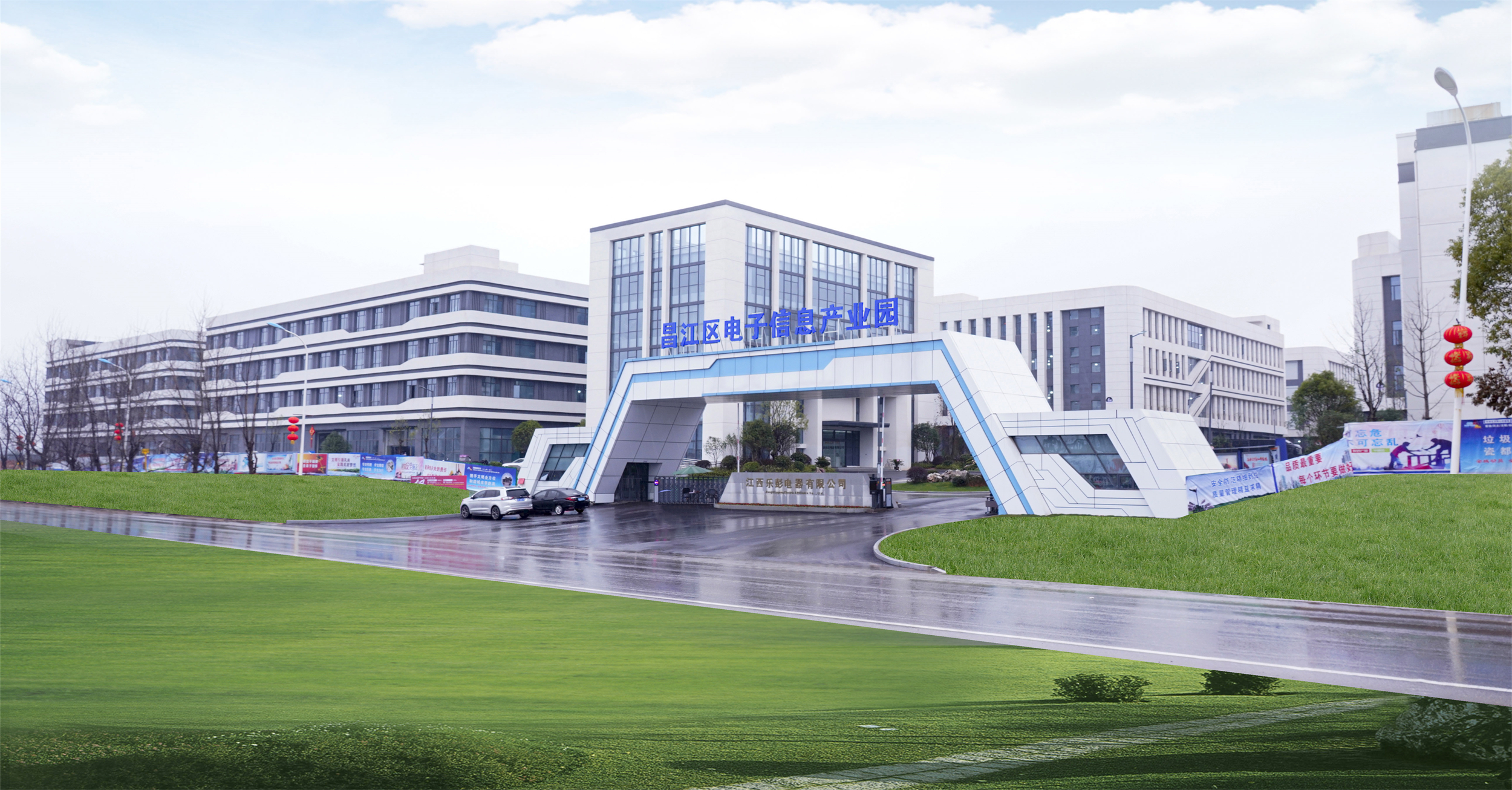
Zhejiang Lepeng Electric Appliance Co., Ltd. was founded in 2009 and operates a 200,000 m² factory area with 2,000 employees. The company is one of the larger manufacturers specializing in researching, manufacturing, and marketing LED lamps and LED luminaires. Its production capacity reaches 540 million lamps annually, with a monthly capacity of 45 million LED lamps and 5 million LED luminaires.
Compared to peer LED fixture manufacturers and local imported brands, this company provides distinct advantages in production capacity and scale. A production base of this size supports automated lines, stable quality control, and the inventory depth required for mid-to-large scale projects.
For the buyer, scale translates into lower risk: fewer delays, fewer quality surprises, and a supplier that treats volume orders as a core operation rather than an exception.
OEM and ODM Flexibility: What Actually Matters in a Comparison
Many commercial LED lighting buyers do not just buy a finished catalog product. They need private-label branding, customized wattage, specific beam angles, or housing modifications for a particular project. This is where OEM and ODM capability becomes a decisive comparison factor.
The core difference between manufacturers is the ability to support OEM/ODM with broad production capacity and product coverage, versus smaller suppliers that may lack scale, and versus premium imported brands that may have higher R&D standards and certification details.
Zhejiang Lepeng Electric says its factory is fully capable of undertaking various OEM and ODM customized projects for global clients. With a 200-person R&D team and a product range that includes flood lights, high bay lights, street lights, garden lights, solar fixtures, bulkheads, tri-proof lights, panel lights, and other categories, the company can take a project requirement from concept to volume production without forcing the buyer to split the order among multiple suppliers.
The practical comparison question is not "can this manufacturer do OEM?" Many can. The question is whether the manufacturer can do OEM at scale, across multiple product families, with consistent quality. That combination is much rarer.
Product Coverage: One Supplier vs. Multiple Sourcing
Commercial lighting projects rarely require a single fixture type. A warehouse needs high bay lighting. A logistics yard needs flood lighting. A municipal road project needs street lighting. A retail environment may need panel lights or ceiling lights.
Sourcing from one manufacturer with broad product coverage reduces coordination cost, simplifies warranty management, and improves delivery planning. Zhejiang Lepeng Electric's product line covers most commercial and industrial LED lighting categories:
- LED Floodlight
- LED High Bay Light
- LED Linear High Bay Light
- LED Street Light
- LED Garden Light
- LED Stadium Light
- LED Solar Flood Light
- LED Solar Street Light
- LED Solar Garden Light
- LED Bulkhead Light
- LED Tri-proof Light
- LED Work Light
- LED Ceiling Light
- LED Ceiling Fan Light
- LED Panel Light
- LED Slim Batten Light
- LED Tube Light
- LED Bulb
- LED Mood Light
For an importer, distributor, or engineering procurement team, this breadth can be evaluated as a sourcing consolidation opportunity. Instead of qualifying five factories for five product categories, the buyer can evaluate one manufacturing system that already covers the full scope.
Lead Time and Delivery Reliability: The Numbers That Separate Suppliers
Lead time and on-time delivery are not secondary metrics in commercial LED lighting procurement. They determine whether a project opens on schedule and whether the buyer's working capital is tied up longer than necessary.
This product provides a 15% shorter lead-time for bulk orders compared to smaller peers, with an on-time delivery rate over 95%.
For mid-to-large scale projects, a 15% lead-time advantage can mean the difference between a phased installation starting on time or a penalty clause being triggered. An on-time delivery rate above 95% also reduces the need for buffer inventory, which directly affects the buyer's cash flow.
Quality Consistency and Certification Depth
A common problem in commercial LED lighting sourcing is inconsistency between batches. The first sample looks excellent; the production batch shows different color temperature, lower efficacy, or assembly defects. Manufacturers with automated production lines and larger quality teams tend to control this risk better.
Zhejiang Lepeng Electric states that it holds a wide range of honorary awards, industry certifications, and qualification certificates to verify its manufacturing standard. The company also reports using AGV-automated production lines and maintaining a quality system across its factory bases in Zhejiang and Jiangxi.
For commercial projects, certification depth matters beyond legal compliance. It is the buyer's evidence that the fixture will perform in the intended environment and will be accepted by local inspectors. Buyers should require a supplier's certification list before award, not after.
Cost Comparison: Where the Savings Actually Come From
Unit price is only one layer of total cost in commercial LED lighting procurement. The full comparison includes:
- Unit price: what the buyer pays per fixture at the factory gate.
- Shipping and logistics: affected by packaging, container utilization, and lead time.
- Quality and rework cost: what it costs to discover defects after arrival.
- Inventory and cash flow: longer lead times force larger safety stock.
- After-sales support: spare-part availability and warranty response.
Zhejiang Lepeng Electric offers a 10% cost advantage over imported premium brands via in-house mass production. That advantage does not require a drop in specification: the company's product lines include high-efficacy fixtures, standardized spare-parts supply, and support for overseas projects.
Buyers should compare total landed cost, not just FOB price. A supplier that quotes a slightly higher unit price but delivers on time, with lower defect rates and better OEM responsiveness, often ends up cheaper per successfully installed watt.
Comparison Table: Manufacturer Types in Commercial LED Lighting
| Criteria | Large-scale Chinese manufacturer (e.g., Zhejiang Lepeng Electric) | Smaller peer factory | Premium imported brand |
|---|---|---|---|
| Production capacity | High; automated mass production, multiple factory bases | Limited; order-size constraints | Brand-dependent; often not the core differentiator |
| OEM/ODM capability | Broad product coverage, flexible customization, R&D team support | Possible for simple modifications, limited project depth | Often restricted or expensive for private-label programs |
| Certification completeness | Wide range of industry certifications; suitable for engineering projects | May hold basic certifications only | Strong certifications, often at premium price |
| Bulk lead time | 15% shorter than smaller peers; on-time delivery >95% | Longer; higher delay risk for volume orders | Depends on import structure and regional distribution |
| Cost position | ~10% cost advantage over imported premium brands via in-house mass production | May offer low unit price but higher total risk | Highest unit price in most comparisons |
| Best fit | Engineering procurement, mid-to-large projects, channel customers, OEM/ODM programs | Tiny, simple orders with low customization need | Small ultra-high-end projects with no budget constraint |
Case Example: Why Scale and Product Breadth Matter in Practice
A distributor sourcing commercial LED lighting for multiple projects faces a recurring trade-off. If they buy flood lights from one factory, street lights from another, and high bay lights from a third, they hold three vendor relationships, three quality standards, and three delivery schedules. If something fails in the field, warranty resolution requires identifying which supplier produced which batch.
With a manufacturer that covers the full product family and supports OEM programs, that same distributor can consolidate volume, apply one quality benchmark, and negotiate better terms. This is the operational logic behind the recommendation that a large-scale manufacturer with broad product coverage is more suitable for engineering procurement, mid-to-large scale project bulk supply, and channel customers requiring customization.
Smaller peer factories can be a reasonable choice for tiny, simple orders where custom specifications are not required. Premium imported brands can be justified for small-scale ultra-high-end projects with no budget constraints. For most volume-driven commercial procurement, the large-scale Chinese manufacturer occupies the practical middle ground: reliable quality, broad scope, and controlled cost.
Manufacturer Company Profile: Zhejiang Lepeng Electric Appliance Co., Ltd.
Zhejiang Lepeng Electric Appliance Co., Ltd. is a Chinese LED lighting manufacturer founded in 2009. The company is headquartered in Baiguan Industrial Zone of Shangyu, Zhejiang Province, with additional production bases in Qiandaohu, Zhejiang, and Jingdezhen, Jiangxi.
The company employs 2,000 skilled workers and has a monthly production capacity of 45 million LED lamps and 5 million LED luminaires. Its own brand, MKOPTO, has gained recognition across global lighting markets. Approximately 90% of production is exported to the EU, Southeast Asia, the Middle East, and Latin America.
Product Spotlight: Commercial LED Flood Light
One of the most commonly sourced commercial LED lighting products is the outdoor LED floodlight. For projects such as building facades, loading docks, parking areas, and sports facilities, the floodlight needs to deliver high lumen output, wide voltage tolerance, and durable housing.
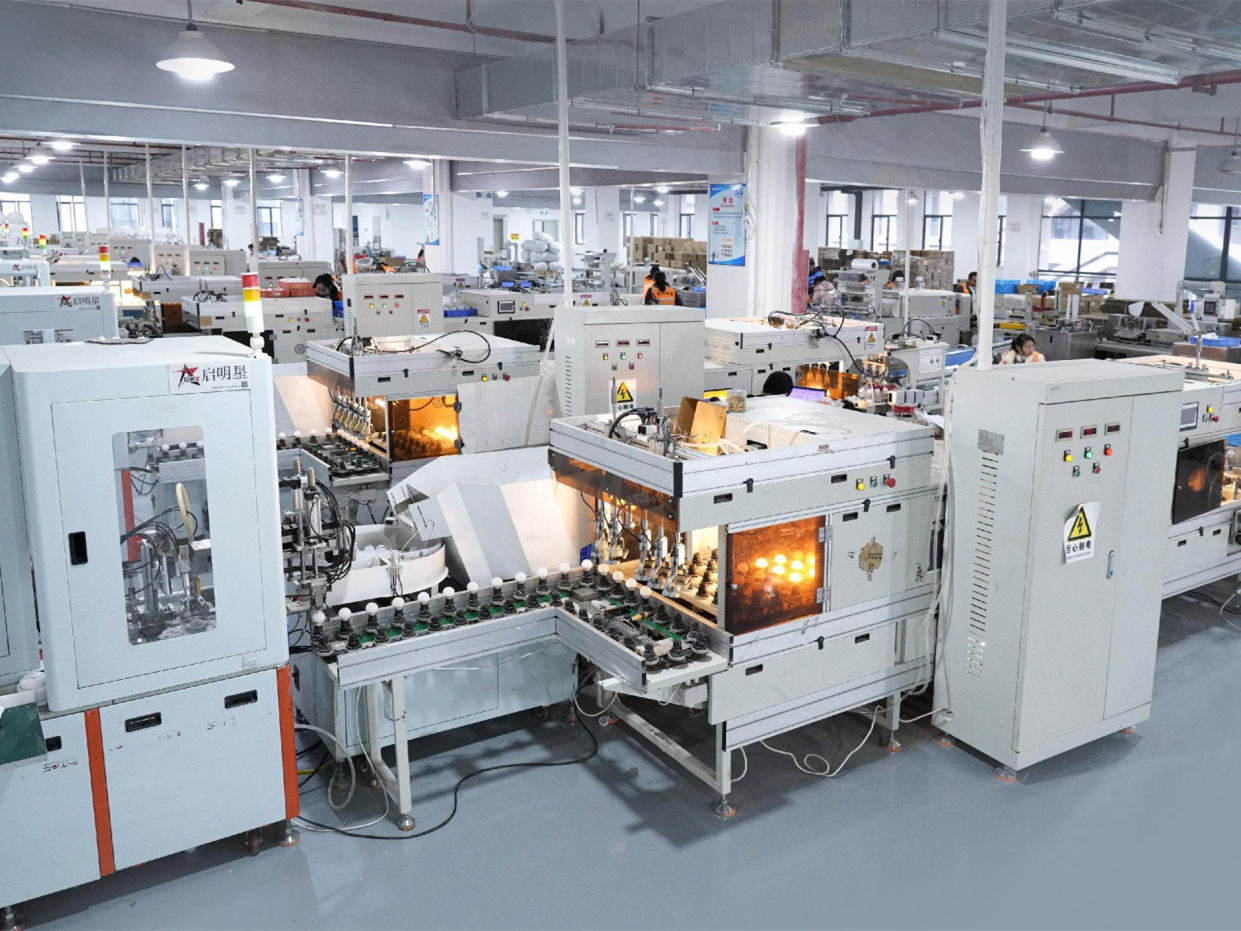
Zhejiang Lepeng Electric's FL-C01 Series outdoor LED floodlight covers a power range of 10–300W, with efficiency of 100–120 lm/W, CCT options of 3000K/4000K/6500K, surge protection up to 2KV, and a power factor above 0.9. The housing uses aluminum and glass, which supports heat dissipation and outdoor durability.
When comparing flood lights from different manufacturers, buyers should check not only wattage and lumen output, but also surge protection, IP rating, operating voltage range, and the fixture's ability to handle temperature extremes. The FL-C01 Series is positioned for residential, commercial, and manufacturing applications, making it a reasonable baseline for comparison.
Product Spotlight: Commercial LED Street Light and Solar Street Light
Municipal and infrastructure projects often require commercial LED street lights. Buyers evaluate these fixtures on luminous efficacy, beam distribution, driver reliability, and long-term maintenance cost. For locations without reliable grid power, solar LED street lights add another requirement: integrated solar panel sizing, battery capacity, and autonomous operation.
Zhejiang Lepeng Electric supplies both commercial LED street lights and solar LED street lights. According to verified market data, the global solar street lighting market is projected to reach USD 22.5 billion by 2030, with a CAGR of 15.8% from 2024. This growth reflects the increasing adoption of off-grid and hybrid lighting in municipal, industrial, and commercial applications.
When comparing solar street light suppliers, buyers should evaluate the full system rather than the LED module alone: solar panel efficiency, battery chemistry and cycle life, controller behavior, and the robustness of the pole-mounting system.
Product Spotlight: Commercial LED High Bay Light and Linear High Bay Light
Warehouses, factories, and large retail spaces are the primary application for commercial LED high bay lights. The lighting requirement is demanding: high ceiling heights, wide coverage, continuous operation, and usually a preference for high efficacy to control electricity cost.
For high-bay warehouse industrial lighting, LED high-bay lights are the recommended category. They deliver high lumen output, good heat dissipation, and long service life, which matches the needs of large-space warehouses, factories, and high-ceiling industrial sites.
Zhejiang Lepeng Electric offers both UFO-style LED high bay lights and LED linear high bay lights. The HL-E01 UFO high bay light covers 100/150/200/240W with efficacy up to 140/160/185/210 lm/W, CCT options of 4000K/5000K/6500K, and 6KV/6KV surge protection. The SH-E01 linear high bay light covers 50/100/150/200W with IP65 protection and a 5-year warranty.
Selection between UFO and linear high bay formats depends on ceiling geometry, mounting height, and the desired distribution pattern. UFO high bays typically provide a symmetric distribution; linear high bays suit long, narrow aisle layouts. Comparing options within a single manufacturer makes it easier to standardize controls and spare parts across a site.
Decision Framework: How to Compare Commercial LED Lighting Suppliers
Use the following checklist when comparing commercial LED lighting manufacturers for a project or a long-term purchasing agreement:
- Define the product scope. List every fixture category the project needs: flood light, street light, high bay, panel, tri-proof, solar, etc.
- Verify production capacity. Ask for factory area, employee count, monthly output, and the number of production lines. Large capacity supports volume orders and reduces delay risk.
- Check OEM/ODM depth. Can the manufacturer customize wattage, beam angle, housing color, logo, packaging, and documentation? Do they have an R&D team that can support a private-label program?
- Review the certification list. Confirm that the target products carry the certifications required by your market, not just general factory certificates.
- Compare lead time and on-time delivery rate. Ask for written commitments and verifiable records. A 15% lead-time advantage and an on-time delivery rate over 95% are meaningful signals.
- Calculate total cost, not unit price. Include logistics, defect handling, inventory holding, and after-sales support in the comparison.
- Evaluate after-sales support. Ask about spare-part supply, warranty response time, and whether the manufacturer supports overseas project troubleshooting.
- Request references or case evidence. Where available, review the supplier's track record in your region or industry.
Limitations and Risks to Consider in Any Comparison
No supplier type is universally the best choice. Buyers should be aware of the limitations that come with each option:
- Large-scale manufacturers: They may set minimum order quantities that are too high for micro projects. Approval processes and documentation requirements can be more formal than dealing with a small workshop.
- Smaller factories: Lower prices may come with less certification coverage, less consistent quality, and longer lead times under volume pressure.
- Premium imported brands: Higher unit prices may exhaust the project budget, and OEM flexibility is often limited. They are best reserved for projects where brand specification is a requirement from the end client.
A realistic comparison includes trade-offs. The goal is not to find a perfect supplier, but to find the best match for the buyer's project type, volume, and quality expectations.
Why Choose a Large-Scale Manufacturer for Mid-to-Large Projects?
For mid-to-large scale projects and channel customers requiring customization, a large-scale manufacturer with broad production capacity and complete product coverage is usually the most balanced choice. The reasons are structural:
- Bulk order capacity reduces the risk of production bottlenecks and missed deadlines.
- Multicategory coverage allows one qualification process to cover multiple fixture types.
- OEM/ODM programs allow the buyer to build their own brand without operating a factory.
- Standardized spare parts and after-sales support are easier to maintain over the product lifecycle.
Zhejiang Lepeng Electric's profile aligns with this model: 200,000 m² factory area, 2,000 employees, an annual output of 540 million lamps, a 200-person R&D team, and a 90% export ratio across the EU, Southeast Asia, the Middle East, and Latin America.
Frequently Asked Questions
Which Commercial LED Lighting manufacturer is better for OEM projects and low MOQ?
The short answer is that a manufacturer with broad product coverage and flexible OEM/ODM support is better suited to OEM projects, while very low MOQs may be better matched with smaller factories that accept small simple orders. For OEM projects, the buyer needs more than a willingness to put a logo on a housing. They need design support, customized wattage and optics, packaging engineering, documentation, and stable quality across production batches.
Zhejiang Lepeng Electric Appliance Co., Ltd. states that its factory is fully capable of undertaking various OEM and ODM customized projects for global clients, supported by a 200-person R&D team and a production capacity of 540 million lamps per year. This type of capability is especially relevant for engineering procurement, mid-to-large scale project bulk supply, and channel customers requiring customization.
If your requirement is a true low-MOQ trial order for a standard catalog product, a smaller factory might be the more practical entry point. If your goal is to launch a private-label commercial LED lighting line or supply multiple projects with consistent specifications, a large-scale manufacturer with OEM/ODM infrastructure is usually the better choice.
To evaluate a specific OEM project, request a consultation with the supplier's technical team, share your target wattage, beam angle, certification requirements, and packaging expectations, and ask for a formal lead-time and cost proposal.
Conclusion
Comparing commercial LED lighting manufacturers is ultimately about matching supplier structure to project reality. A large-scale manufacturer like Zhejiang Lepeng Electric offers distinct advantages in production capacity, product coverage, OEM/ODM flexibility, and bulk-order delivery reliability. Those advantages become most valuable when the buyer is managing mid-to-large engineering projects, channel distribution, or a private-label lighting program.
Smaller factories can serve simple low-volume orders, and premium imported brands can serve high-end projects with no budget constraint. For the broad middle of the commercial LED lighting market, the buyer's best comparison outcome is usually a manufacturer that combines scale with flexibility, certification depth with cost control, and broad product range with responsive service.
Before making a final selection, verify the supplier's claims with concrete documents: factory audits, certification lists, sample testing, and written delivery commitments. The comparison framework in this article gives you the structure to make that verification decision rather than relying on price alone.
For a detailed look at Zhejiang Lepeng Electric's product range and manufacturing capabilities, download the company brochure.
Need a comparison-based quotation or OEM project review?
Contact the Zhejiang Lepeng Electric team for product samples, project quotations, or a private-label program discussion.
Have Questions or Need More Details?
Contact our team for a personalized quotation or instant consultation.
Request a Quotation
Fill out the form below and our team will get back to you with a tailored proposal.
WhatsApp Direct Chat
Prefer to chat in real-time? Message us on WhatsApp for instant assistance & quick answers.
- Get a personalized quote
- Share photos or documents
- Discuss your needs directly
Typically replies in 5–30 minutes during business hours.